
How to Plan a Wedding Music Timeline Right
A great wedding can survive a lot – a late shuttle, a missing boutonniere, even a little weather drama. What guests remember, though, is how the celebration felt. If you’re figuring out how to plan a wedding music timeline details, you’re really deciding where the emotion builds, when the energy peaks, and how the entire day flows from elegant to unforgettable.
Music is not background filler at a premium wedding. It sets the pace of the ceremony, shapes the mood at cocktail hour, and turns a reception from pleasant into electric. That’s why booking a band like Red Hot Revolution or Modern Retrospect is so very important if the goal is to create an unforgettable day. The strongest timelines are intentional. They account for the natural rhythm of the event, the personalities of the couple, and the kind of guest experience you want people talking about long after the last song ends.
How to Plan a Wedding Music Timeline from Ceremony to Reception
The easiest mistake couples make is treating music like one big block of time. In reality, your wedding day has distinct chapters, and each one needs its own sound, timing, and level of energy. A string quartet playing guests into the ceremony serves a completely different purpose than a high-energy dance band opening the reception.
Start by thinking in moments, not songs. You need music for pre-ceremony guest arrival, the processional, the ceremony itself if there are special elements, the recessional, cocktail hour, introductions, dinner, formal dances, open dancing, and the exit if you’re planning one. Once those moments are mapped, your timeline becomes much easier to build.
Wedding Music Timeline Checklist
- Pre-ceremony music for guest arrival and seating
- Processional music for the wedding party and couple’s entrance
- Ceremony music for special readings, unity moments, or religious traditions
- Recessional music for the couple’s joyful exit
- Cocktail hour music to create an elegant, social atmosphere
- Reception entrance music for the couple and wedding party
- First dance, parent dances, and other formal dance moments
- Dinner music that supports conversation without feeling dull
- Open dancing music that keeps the reception exciting
- Final song or exit music to end the night memorably
That also helps you decide where live music creates the biggest impact. Some couples want a refined ceremony ensemble and a world-class reception band. Others care most about a packed dance floor and keep the earlier portions more understated. Neither approach is wrong. It depends on your priorities, budget, and how immersive you want the entertainment to feel throughout the event.
Start with the Emotional Arc of the Day
Before you choose specific songs or performance styles, decide what each part of the wedding should feel like. The ceremony usually calls for elegance, anticipation, and emotion. Cocktail hour should feel social and elevated. Dinner music should support conversation without flattening the room. Then the reception should build momentum until the dance floor is full and stays full.
This emotional arc matters because timing alone does not create flow. A technically correct schedule can still feel disjointed if the music jumps too abruptly from one mood to another. The most polished weddings feel curated. Guests don’t notice every transition, but they absolutely feel them.
For that reason, premium live entertainment often outperforms a pieced-together playlist. Professional musicians know how to shape a room in real time. They can lift energy gradually, stretch a moment when needed, or pivot if the evening is running ahead or behind.

Ceremony Timing Should be Precise
Ceremony music is where timing matters most. Guest seating music typically begins 20 to 30 minutes before the ceremony start. This sets the tone immediately and tells guests they’ve arrived somewhere special. If you’re hosting a luxury wedding, this is an ideal place for strings, piano, or a jazz ensemble with restraint and polish.
The processional needs exact planning. You’ll want to know who is walking, in what order, and how long the aisle actually is. A song that feels perfect on paper can be too short or too long in practice. This is why experienced musicians and planners often recommend choosing pieces that can be extended or cleanly edited to fit the live pace of the procession.
The recessional is different. This is the release moment. It should feel joyful, triumphant, and slightly bigger than the ceremony itself. Once the couple exits, many events continue with upbeat post-ceremony music as guests transition toward cocktails.
Sample Ceremony Music Timing
| Wedding Moment | Recommended Timing | Music Style |
|---|---|---|
| Guest Seating | 20-30 minutes before ceremony | Strings, piano, acoustic guitar, or light jazz |
| Wedding Party Processional | Immediately before the couple’s entrance | Elegant, emotional, and carefully paced |
| Couple’s Entrance | Main ceremony entrance moment | Romantic, dramatic, or deeply personal |
| Recessional | Immediately after the couple is announced | Joyful, upbeat, and celebratory |
| Post-Ceremony Transition | As guests move toward cocktail hour | Light, polished, and welcoming |
Cocktail Hour Should Feel Effortless, Not Sleepy
Cocktail hour often gets underestimated, yet it’s one of the best opportunities to create a high-end atmosphere. Guests are arriving from the ceremony, greeting each other, and taking in the setting. Music here should feel stylish and social, not passive.
A jazz trio, acoustic group, or sophisticated party band configuration can make this hour feel elevated without competing with conversation. The goal is not volume. The goal is momentum. If cocktail hour feels flat, the reception can start with less energy than you want.
Build the Reception Around Pacing, Not Just Traditions
Reception timelines often get too crowded. Couples try to fit every tradition into a narrow window, and the music ends up feeling interrupted. If you want a celebration that feels smooth and high-impact, pace the evening carefully.
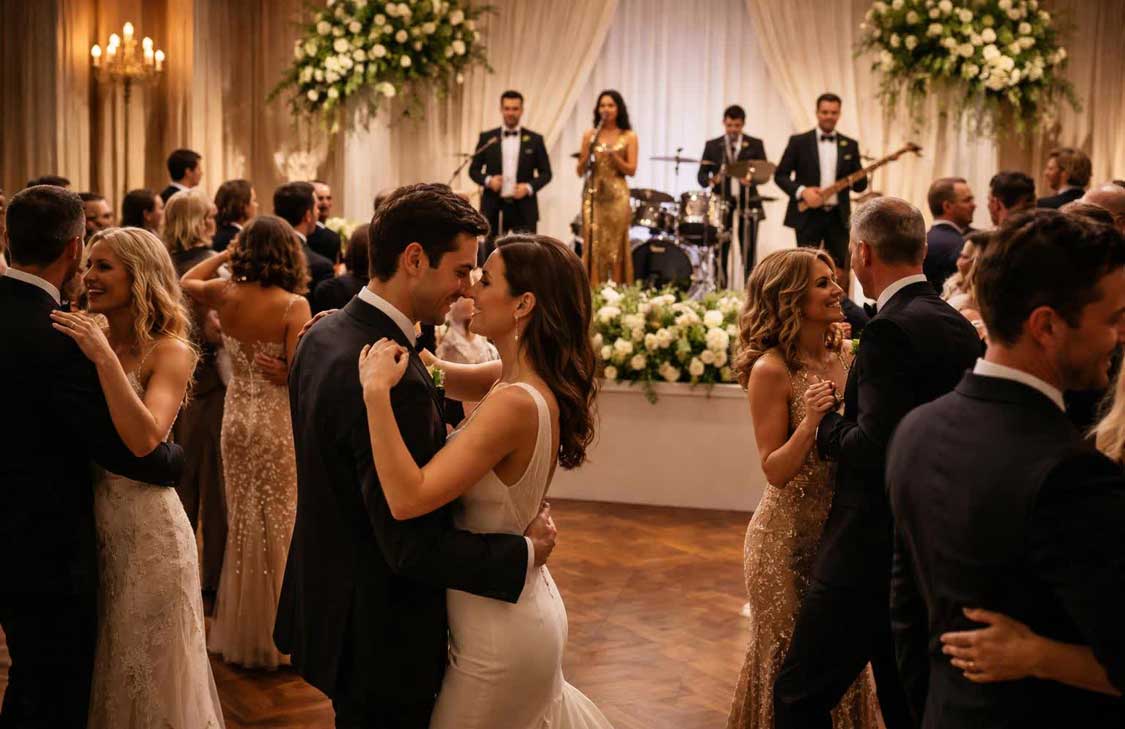
Guests generally respond best when the reception opens with a strong entrance, moves quickly into a welcome or first dance, and then settles into dinner with intention. Formalities should be grouped strategically so they don’t keep stopping the party before it begins.
For example, many couples place the first dance right after introductions because it creates a cinematic opening. Parent dances can happen then as well, or later in the evening if you want to spread out the emotional moments. Toasts are often strongest during dinner, when guests are seated and attentive. Cake cutting can happen after dinner without requiring a major pause in energy.
How Much Dance Time Do You Actually Need?
This depends on your guest list and your priorities. If dancing is a headline feature of the night, plan for at least two solid hours of open dancing with incredible bands like Metro Music Club and Liquid Blue. Or extend the time even further to two and a half or three hours for a larger celebration. If your crowd is more formal or your wedding includes multiple cultural elements, the timeline may need more flexibility.
The key is protecting your best dance-floor window. Once dinner is over and formalities are done, avoid unnecessary interruptions. A great band can build serious momentum, but repeated pauses can drain the room. If your vision is an incredible, high-energy party, give your entertainment enough uninterrupted time to deliver it.
Match the Music Format to Each Stage
Not every part of the wedding needs the same type of entertainment. In fact, one of the smartest ways to plan a wedding music timeline is to match ensemble size and style to the moment.
A ceremony may call for strings or piano. Cocktail hour may work beautifully with jazz or acoustic arrangements. Dinner can be covered by a smaller live configuration or curated band break music. Then the full reception band can take over when it’s time to transform the room.
This layered approach gives the event dimension. It also prevents fatigue. Full-throttle energy too early can make the reception feel one-note. On the other hand, staying too reserved for too long can leave the party struggling to ignite. The right entertainment progression keeps the experience polished and dynamic.
If you’re booking through a premium agency like Wedding Music Bands, this is where expert guidance becomes especially valuable. The right partner can help you build a custom entertainment flow that feels cohesive from the first guest arrival to the last dance.
Best Music Options for Each Part of the Wedding
| Wedding Segment | Best Music Option | Why It Works |
|---|---|---|
| Ceremony | String quartet, pianist, harpist, or acoustic musician | Creates elegance, emotion, and a refined atmosphere |
| Cocktail Hour | Jazz trio, acoustic duo, or small live ensemble | Keeps the mood stylish without overpowering conversation |
| Dinner | Soft live music or carefully selected background music | Maintains warmth and energy while guests eat and talk |
| Formal Dances | Live band or custom song performance | Makes the first dance and parent dances feel more memorable |
| Open Dancing | High-energy live wedding band | Builds excitement and keeps the dance floor full |
| Final Song or Exit | Big closing song or upbeat send-off music | Ends the night with a strong emotional finish |
Coordinate Music With Your Planner, Photographer, and Venue
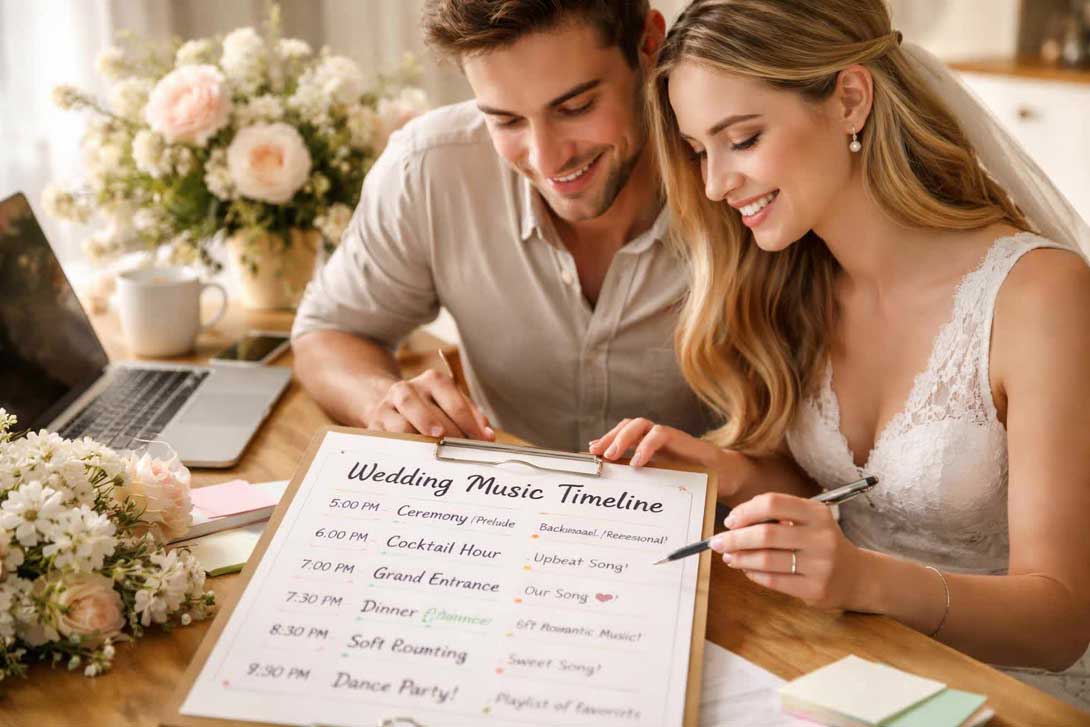
A wedding music timeline should never live in isolation. Entertainment timing affects almost every other vendor. Your planner needs to coordinate cues. Your photographer and videographer need to know when major moments happen. Your venue and caterer need to align service with performances and speeches.
This is especially important for introductions, formal dances, and any surprise moments. If your band is ready for a grand entrance but catering is still clearing salads, the pacing suffers. If speeches run long and no one adjusts the music plan, your dance floor window shrinks.
Strong communication solves this. Share a detailed run of show with your entertainment team and confirm who will cue each event. The best bands and music professionals are used to collaborating with planners and venues to keep the night on track without making it feel rigid.
Leave Room for Real Life
Even the best timeline needs breathing room. Weddings run late. Bustles break. Transportation hiccups happen. Family members disappear right before photos. If your music schedule is packed too tightly, small delays can ripple through the entire evening.
Build in buffer where you can, especially between ceremony and cocktails, before introductions, and around dinner service. That doesn’t mean making the event feel loose. It means giving your team enough flexibility to preserve the guest experience if something shifts.
Live music helps here because professionals can adjust in real time. They can vamp while a bridal party lines up, extend background music during a delayed transition, or hold the room’s attention while logistics catch up.
The Smartest Way to Choose Songs
Song selection matters, but it should support the timeline rather than control it. Pick songs that are meaningful for spotlight moments such as the processional, recessional, first dance, and parent dances. For the rest of the event, think in style, energy, and audience response.
A great reception set is rarely built around only the couple’s personal favorites. It also needs to reflect who is in the room. A wedding with a mixed-age guest list often performs best with a band that can move confidently across eras and genres, keeping the energy broad and inclusive without feeling generic.
This is one of the biggest advantages of elite live bands. They don’t just play songs well. They read the crowd, adjust the set, and create the kind of packed dance floor that turns a beautiful wedding into an unforgettable event.
When you plan your music timeline with intention, the whole celebration feels more expensive, more emotional, and more alive. Every transition lands better. Every high point feels bigger. And when the final set kicks in and the room erupts, you won’t be wondering whether the entertainment was worth the planning. You’ll be watching the dance floor and knowing you got it exactly right.
Frequently Asked Questions About Planning a Wedding Music Timeline
When should wedding ceremony music begin?
Wedding ceremony music usually begins about 20 to 30 minutes before the ceremony starts. This gives guests time to arrive, find their seats, and settle into the mood of the day before the processional begins.
How much dancing time should we include in the reception timeline?
If dancing is an important part of your wedding reception, plan for at least two hours, and up to four hours, of open dancing. For a larger wedding or a couple that wants a high-energy party, two and a half to three hours is often even better.
Should we use the same musicians for the ceremony and reception?
You can, but many weddings work best with different music formats for different parts of the day. For example, strings or piano may be ideal for the ceremony, while a full live band may be the better choice for the reception and dance floor.
What is the biggest mistake couples make with their wedding music timeline?
One of the biggest mistakes is packing too many interruptions into the reception. Too many pauses for speeches, traditions, or announcements can make it harder for the band or DJ to build momentum and keep guests dancing.
How can a live band help with the wedding timeline?
An experienced live band can adjust in real time if the schedule changes. They can extend a song, fill unexpected gaps, shift the energy of the room, and help create smooth transitions from one part of the celebration to the next.
