
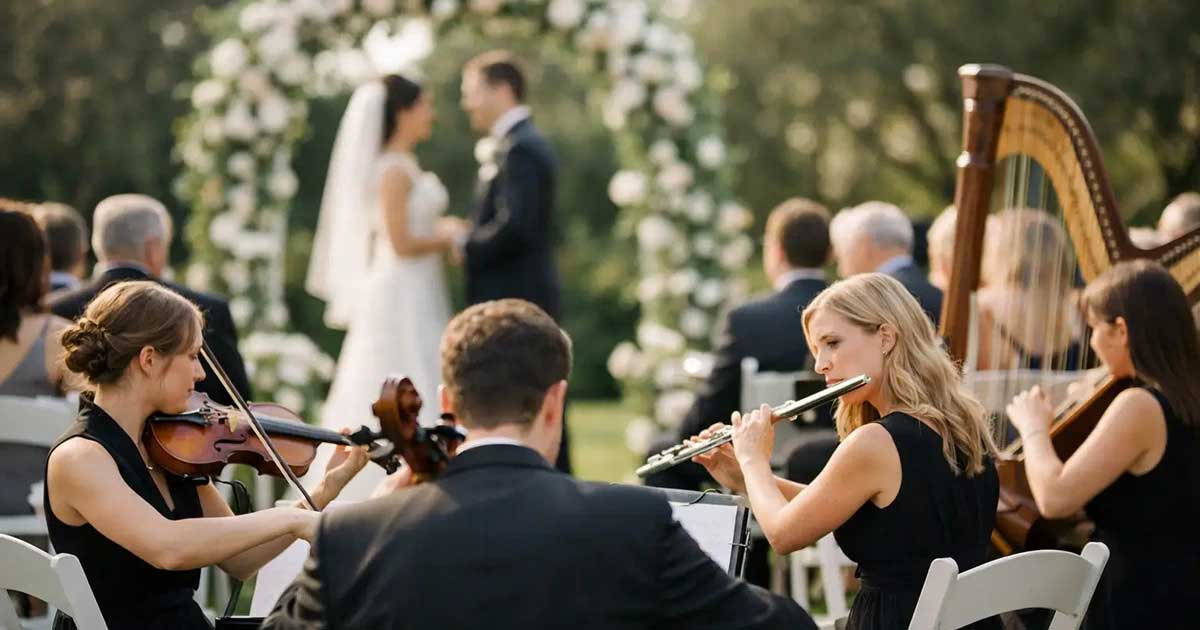
Best Wedding Ceremony Music Ensembles
The moment the first note hits, guests stop chatting, phones lift, and the ceremony suddenly feels real. Choosing the best wedding ceremony music ensembles is not a small aesthetic detail – it is one of the clearest ways to shape the emotion, sophistication, and pace of the most meaningful part of the day.
For couples planning a refined celebration, ceremony music has a very different job than reception entertainment. It does not need to fill a dance floor. It needs to create atmosphere, flatter the setting, support every transition, and make the processional, vows, and recessional feel elevated instead of generic. The right ensemble can make a garden ceremony feel cinematic, a church ceremony feel timeless, and a beachfront event feel intimate without losing polish.
Popular Wedding Ceremony Music Ensemble Options
- String Quartet for timeless elegance and formal weddings
- String Trio for smaller ceremonies with classic charm
- Solo Violin or Solo Cello for intimate, emotional performances
- Solo Harp or Harp Ensemble for romantic and luxurious ceremonies
- Classical Guitar or Guitar Duo for relaxed upscale celebrations
- Piano with optional violin, cello, or vocalist for indoor venues
- Acoustic Duo, Trio, or Quartet for contemporary ceremonies and personalized song selections
What Makes the Best Wedding Ceremony Music Ensembles Stand Out
At the premium level, the difference is rarely just the song list. It is the quality of the musicianship, the ensemble’s sense of timing, and their ability to perform with elegance under pressure. A top-tier ceremony group knows how to begin exactly when the doors open, adjust on the fly if the bridal party walks more slowly than expected, and maintain beautiful continuity between key moments without making the music feel intrusive.
Versatility matters too. Many couples want classical selections for prelude music, a contemporary acoustic piece for the processional, and something celebratory for the recessional. The best ensembles can move across genres while still sounding cohesive and luxurious. That flexibility is especially valuable for planners managing multi-generational guest lists and couples blending traditions.
Just as important, the ensemble has to fit the room. A breathtaking group in the wrong format can feel off-balance. A six-piece group may be too much for a small chapel, while a solo instrument may disappear in an expansive outdoor venue. Great ceremony music is not only about talent – it is about scale, tone, and placement.
Best Wedding Ceremony Music Ensembles for Different Wedding Styles
String Quartet
A string quartet is the gold standard for ceremony elegance. Two violins, viola, and cello deliver a rich, layered sound that feels instantly formal and emotionally resonant. This format works beautifully for luxury hotel weddings, estates, churches, ballrooms, and outdoor ceremonies where couples want timeless sophistication.
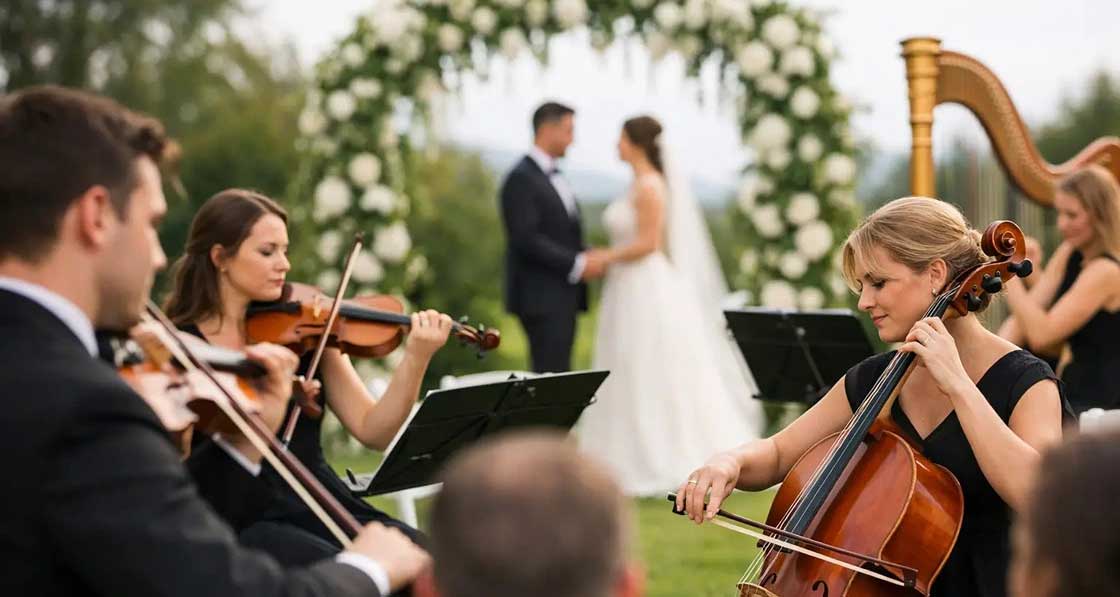
A strong quartet can perform classical standards with precision, then shift into elevated arrangements of modern love songs without losing that polished finish. The trade-off is that a quartet leans more traditional in feel than some couples want. If your wedding style is highly relaxed, bohemian, or contemporary-minimal, a quartet may feel more formal than necessary.
String Trio
A string trio offers many of the same benefits as a quartet, but with a slightly lighter texture and often a more efficient footprint. For smaller ceremonies or tighter layouts, that can be a real advantage. You still get warmth, romance, and elegance, but with a little less visual and sonic weight.
This is often a smart choice for upscale weddings where couples want live strings but do not need the full breadth of a quartet. It can also be ideal when the ceremony budget needs to stay disciplined without sacrificing quality.
Solo Violin or Solo Cello
A single featured instrument can be striking when the setting is intimate and the musical direction is deliberate. Solo violin is graceful, lyrical, and highly versatile. Solo cello brings a deeper, more cinematic tone that feels rich and modern at the same time.
The appeal here is simplicity. In a small chapel, private garden, or indoor ceremony with excellent acoustics, a soloist can create a beautiful, focused atmosphere. The limitation is coverage. Outdoors or in larger guest counts, one instrument may not carry with enough presence unless sound reinforcement is handled carefully.
Harp Ensemble or Solo Harp
Few instruments feel as instantly romantic as the harp. It has a soft, luminous quality that suits formal weddings, luxury tented events, and scenic destination ceremonies especially well. Harp is particularly effective for prelude music and processionals that need grace rather than dramatic power.
That said, harp is a more distinctive taste. It creates a specific mood, and while many couples love that ethereal tone, others may find it too delicate if they want something contemporary or bold. It also requires practical planning around space, weather, and transport.
Classical Guitar or Guitar Duo
For couples who want elegance without leaning overly traditional, classical guitar can be a standout choice. It feels warm, refined, and intimate, making it excellent for courtyards, vineyards, beach ceremonies, and architectural spaces with a more relaxed luxury aesthetic.
A guitar duo adds depth and rhythmic support while keeping the sound understated. This format tends to feel more contemporary and less formal than strings, which is exactly why many couples choose it. If you want black-tie grandeur, however, strings will usually deliver more impact.
Piano or Keyboard Ensemble
For indoor ceremonies, piano can be exceptionally powerful. A gifted pianist can move from classical repertoire to modern ballads with ease, and the sound feels naturally emotional without overwhelming the room. When the piano is paired with a guitarist, violinist, cellist, or vocalist, the piano becomes even more expressive.
The main factor is venue compatibility. If there is a quality grand piano on site, the result can be stunning. If not, a digital setup may still sound excellent, but it changes the visual effect. For style-conscious couples, that detail matters.
Acoustic Duo, Trio, or Quartet
An acoustic ensemble is one of the most flexible choices for modern weddings. Think guitar and vocals, piano and vocals, a trio or quartet with light percussion and strings, or additional musicians like a flute player or clarinetist. This format is ideal for couples who want recognizable songs, a more personal atmosphere, and arrangements that feel stylish rather than strictly classical.
This is often the right answer for contemporary ceremonies where the music needs to feel current and emotionally direct. The key is quality control. An acoustic group can feel unforgettable or underwhelming depending on the vocal standard, arrangement quality, and overall professionalism. For a premium event, experienced performers matter even more in a stripped-down format because there is nothing to hide behind.
Wedding Ceremony Music Ensemble Comparison
| Ensemble | Best For | Atmosphere | Works Best At |
|---|---|---|---|
| String Quartet | Traditional luxury weddings | Elegant and timeless | Churches, hotels, estates, ballrooms |
| String Trio | Medium-sized ceremonies | Classic with a lighter sound | Gardens, chapels, boutique venues |
| Solo Violin or Cello | Intimate weddings | Emotional and personal | Private gardens, chapels, indoor venues |
| Harp | Romantic luxury ceremonies | Soft and ethereal | Luxury tents, estates, destination weddings |
| Classical Guitar Duo | Relaxed elegant weddings | Warm and refined | Beaches, vineyards, courtyards |
| Piano Ensemble | Indoor ceremonies | Elegant and expressive | Hotels, ballrooms, churches |
| Acoustic Ensemble | Modern weddings | Contemporary and personal | Outdoor venues, wineries, private estates |
How to Choose the Right Ensemble for Your Venue and Guest Experience
The best choice starts with the venue. A cathedral, ballroom, waterfront lawn, and private residence all ask for something different. Acoustics, weather exposure, ceremony length, guest count, and the distance between musicians and seating all affect what will sound polished in the moment.
Next, think about the emotional tone you want guests to feel before anyone walks down the aisle. Some couples want grandeur. Others want tenderness, intimacy, or a sense of modern romance. Your ensemble sets that emotional temperature immediately.
Then look at your processional itself. A long aisle and large bridal party often benefit from fuller instrumentation because the music needs to sustain momentum. A shorter, more intimate entrance can feel more special with a soloist or duo. There is no universal best option here. It depends on scale and pacing.
Song selection should also guide the decision. If your must-play list includes classical pieces, film score arrangements, and contemporary pop reworks, strings usually offer the widest elegant range. If your vision centers on singer-songwriter material or meaningful lyrics, an acoustic vocal ensemble may be a better fit.
Tips for Choosing the Best Wedding Ceremony Music Ensemble
- Match the ensemble size to your venue and guest count.
- Consider the ceremony location’s acoustics, especially for outdoor weddings.
- Choose musicians experienced with weddings rather than concert performances alone.
- Select an ensemble that can perform both classical and modern songs if flexibility is important.
- Coordinate your processional and recessional songs well before the wedding day.
- Ask for performance samples or live recordings before booking.
- Ensure the musicians coordinate with your planner and officiant for perfect ceremony timing.
Why Premium Ceremony Musicians are Worth it
When it comes to ceremony songs, there is very little room for error. There are no second takes on the processional. No one wants a shaky entrance cue, inconsistent tempo, or musicians who seem uncertain about timing. This is why experienced, event-tested ensembles matter so much.
Professional ceremony musicians bring more than talent. They bring poise, communication, wardrobe polish, and the ability to coordinate with planners, officiants, photographers, and venue teams. They know when to extend a phrase, when to fade, and how to support the ceremony without pulling focus from it.
For couples investing in a beautiful event, this level of professionalism is part of the luxury. It turns music from a background detail into a defining layer of the experience. That is exactly why so many planners and high-end clients work with trusted specialists such as Wedding Music Bands when they want ceremony entertainment that feels as elevated as the rest of the celebration.
A Smart Way to Narrow Your Options
If you are deciding between formats, start by asking which matters most: timelessness, intimacy, versatility, or impact. An exquisite wedding quartet is hard to beat for classic elegance. A soloist or duo can feel deeply personal. Acoustic ensembles shine when contemporary style is the priority. Piano-based groups are ideal when the venue supports them beautifully.
It also helps to picture the visual scene, not just the sound. Your wedding ceremony musicians become part of the ceremony design. Their presence, attire, setup, and scale should feel aligned with the setting. The strongest weddings are cohesive at every level, and music is a major part of that visual and emotional consistency.
When ceremony music is chosen with real intention, the entire event starts at a higher level. Guests feel it immediately. The aisle walk lands with more emotion, the vows sit in a more beautiful silence, and the recessional has the kind of lift people remember long after the last song of the night.
Frequently Asked Questions
What is the most popular wedding ceremony music ensemble?
A string quartet remains one of the most popular choices because it combines timeless elegance with the versatility to perform both classical pieces and modern love songs. It suits a wide range of venues, from churches and estates to luxury hotels.
How many musicians should I hire for my wedding ceremony?
The ideal number depends on your venue, guest count, and the atmosphere you want to create. Solo musicians work well for intimate ceremonies, while duos, trios, quartets, or larger ensembles provide a fuller sound for larger indoor or outdoor celebrations.
Can wedding ceremony ensembles perform modern songs?
Yes, of course. Most professional wedding ensembles offer custom arrangements of contemporary pop, film scores, and popular love songs while maintaining an elegant style that complements the ceremony. Be sure to discuss your preferred song list with the musicians well in advance of your wedding day.
