
A Guide to Reception Music Planning That Works
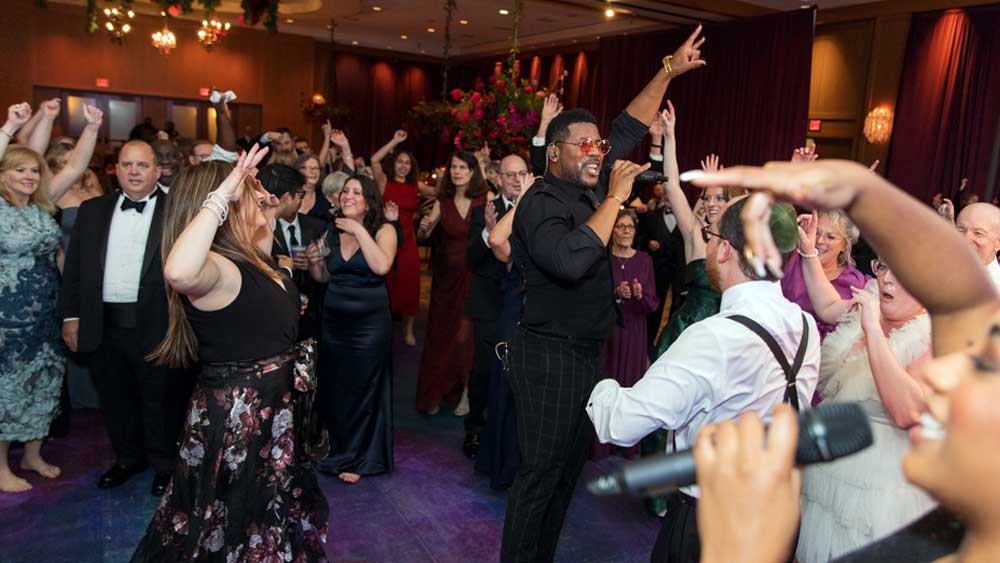
The first song after dinner can change the entire trajectory of a wedding reception. Get it right, and guests move toward the dance floor before they have time to overthink it. Get it wrong, and even a beautiful ballroom can feel hesitant. This guide to reception music planning is built around that truth: music is not background decoration. It is the energy plan for the celebration.
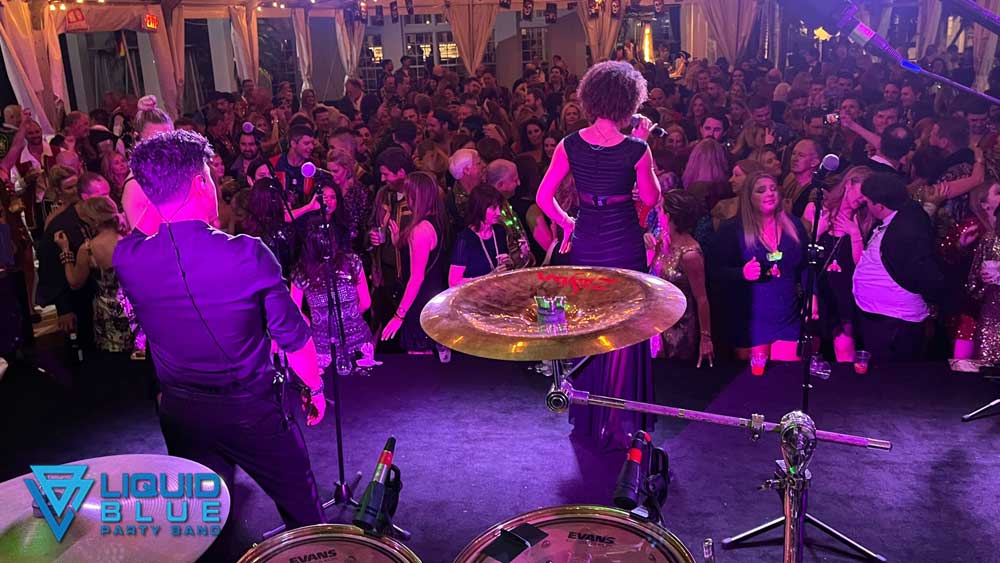
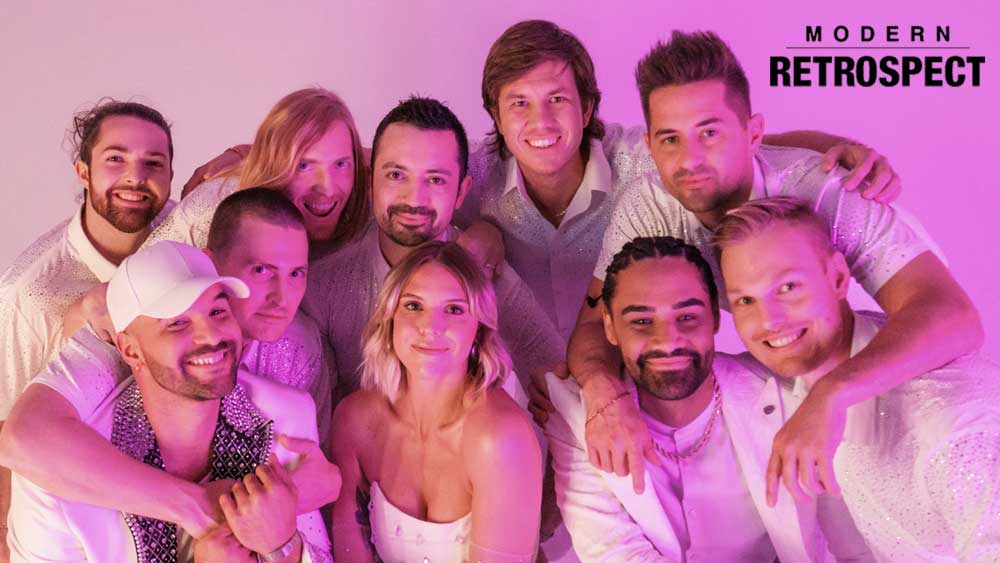
For couples investing in a premium live band, the goal is not simply to choose favorite songs. It is to create a reception that feels polished at every turn, personal without becoming predictable, and high energy when the room is ready for it. The best music plan gives your band clear direction while leaving talented performers room to read the crowd and deliver a show. Wedding Music Bands offers some of the best and most popular wedding bands in the world. You can’t go wrong with bands like Liquid Blue (the official “World’s Most Traveled Band”) or Modern Retrospect (popular with celebrity weddings).
Start With the Reception You Want Guests to Feel
Before making a single song request, decide what you want guests to say on the way home. Maybe you want a glamorous black-tie party with Motown, soul, and sophisticated pop. Maybe you picture a full-throttle celebration where every generation is singing along to dance-floor classics. A country-forward reception, a jazz-infused cocktail experience, or a destination wedding with Latin and international influences can be equally spectacular when the entertainment matches the vision.
Describe the feeling in a few direct phrases: elevated and energetic, romantic and timeless, stylish and unexpected, or all-out dance party. This gives your entertainment team a useful creative brief. It is more valuable than a list of 100 disconnected songs because it tells them how the night should build.
Also consider your guest mix. A reception with college friends, grandparents, work colleagues, and young children needs musical range. That does not mean every song must appeal equally to every person. It means the overall night should give different guests a reason to join in. Elite live bands excel at moving across decades and genres without making the set feel scattered.
Build Your Reception Music Timeline
A reception has distinct moments, and each needs its own musical purpose. Planning them early prevents last-minute decisions that can disrupt the flow of a beautifully produced evening.
Guest Arrival and Cocktail Hour
Cocktail hour should signal that guests have entered a special experience. Live jazz, a string quartet, acoustic guitar, or a refined playlist can establish warmth without competing with conversation. Think recognizable, elegant material rather than loud party music. This is also an excellent time to introduce a musical style that may not fit the late-night dance floor, such as jazz standards, bossa nova, or instrumental versions of modern favorites.
If cocktail hour and dinner are in different spaces, tell your musicians and planner exactly where each portion takes place. Production, power access, travel time, and sound levels all affect what is realistic.
Grand Entrance
The grand entrance is brief, but it sets the visual and musical tone for the reception. Choose a song with an immediate payoff, not a slow build that takes 45 seconds to become recognizable. A bold brass hit, a confident beat, or a celebratory chorus gives the wedding party something to play to as they enter.
Your entrance music can be playful, luxurious, or wildly high energy. What matters is commitment. If you want a glamorous introduction, use a song that feels cinematic. If you want a dance-party opening, let the band bring the room up quickly and keep the momentum moving into your first dance or welcome.
First Dance, Parent Dances, and Special Dances
These songs should feel like yours, but they must also work in the room. A meaningful song with a very long instrumental intro may be perfect for a private listen and less effective during a live reception. Ask your band whether they can create a polished shortened version, begin at a specific lyric, or end cleanly after two verses and choruses.
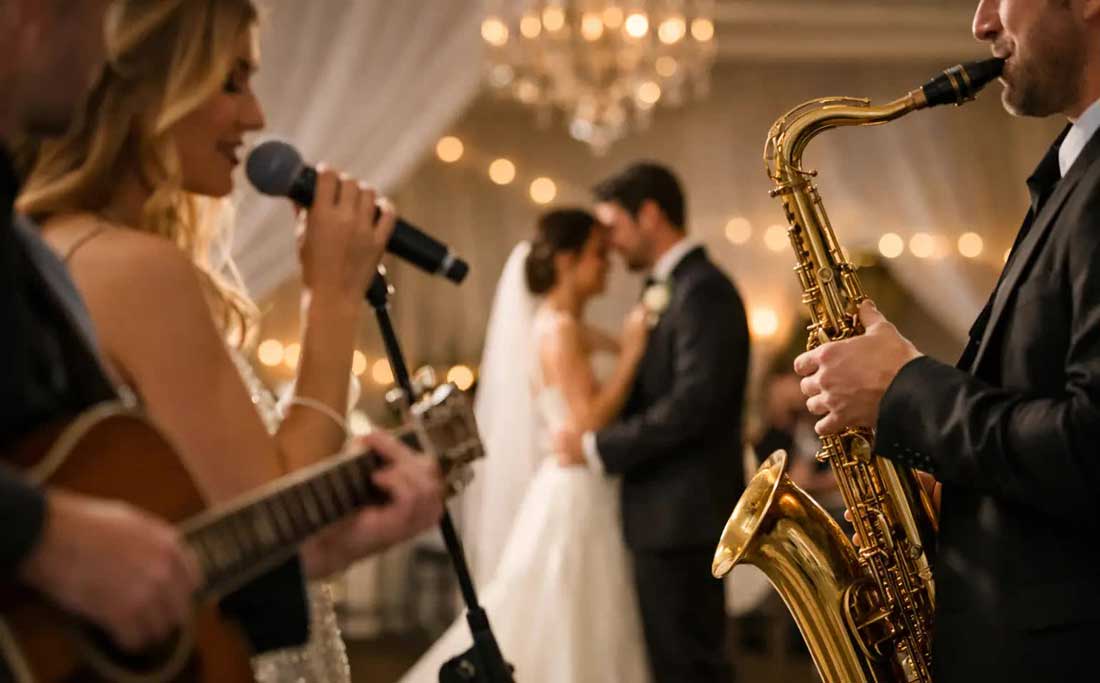
Live performance makes these moments even more memorable, especially when the vocalist can tailor the arrangement to your preferred tempo and mood. Still, do not assume every recording translates naturally to a live band. A seasoned entertainment team can recommend an arrangement that preserves the emotion while giving photographers, videographers, and guests a strong moment to experience.
Dinner Music
Dinner music should support the atmosphere, not swallow the conversation. This is where couples often make the mistake of requesting only slow songs. Slow is not the same as sophisticated. A great dinner set can include soulful mid-tempo classics, acoustic pop, jazz-inspired arrangements, and tasteful contemporary songs that keep the room feeling alive.
The volume should be intentionally managed. At a high-end reception, guests should be able to speak comfortably across the table without feeling as if the entertainment has disappeared. Discuss room size, ceiling height, guest count, and table layout with your band and planner before the event.
Reception Music Planning Checklist
- Define the overall atmosphere you want guests to experience.
- Choose music for every major reception moment before the wedding day.
- Select your must-play songs and your do-not-play list, but keep them short.
- Coordinate your reception timeline with your band and wedding planner.
- Discuss sound requirements, venue restrictions, and stage space.
- Decide which moments should feature live music versus recorded tracks.
- Confirm entrance songs, first dance, parent dances, and cake-cutting music.
- Allow your live band flexibility to adjust songs based on guest energy.
- Choose a memorable last song that ends the evening on a high note.
- Create backup playlists in case of unexpected technical issues.
Plan the Dance Floor Like a Headliner Set
Recommended Reception Music Timeline
| Reception Moment | Recommended Music Style | Purpose |
|---|---|---|
| Guest Arrival | Soft instrumental, acoustic, jazz | Create a welcoming atmosphere |
| Cocktail Hour | Jazz, acoustic pop, light classics | Encourage conversation and relaxation |
| Grand Entrance | High-energy anthem | Build excitement immediately |
| Dinner | Mid-tempo soul, jazz, acoustic favorites | Maintain ambiance without overpowering conversation |
| Open Dancing | Dance hits, Motown, pop, rock, R&B | Keep guests on the dance floor |
| Final Song | Sing-along classic or emotional anthem | End the reception with a memorable moment |
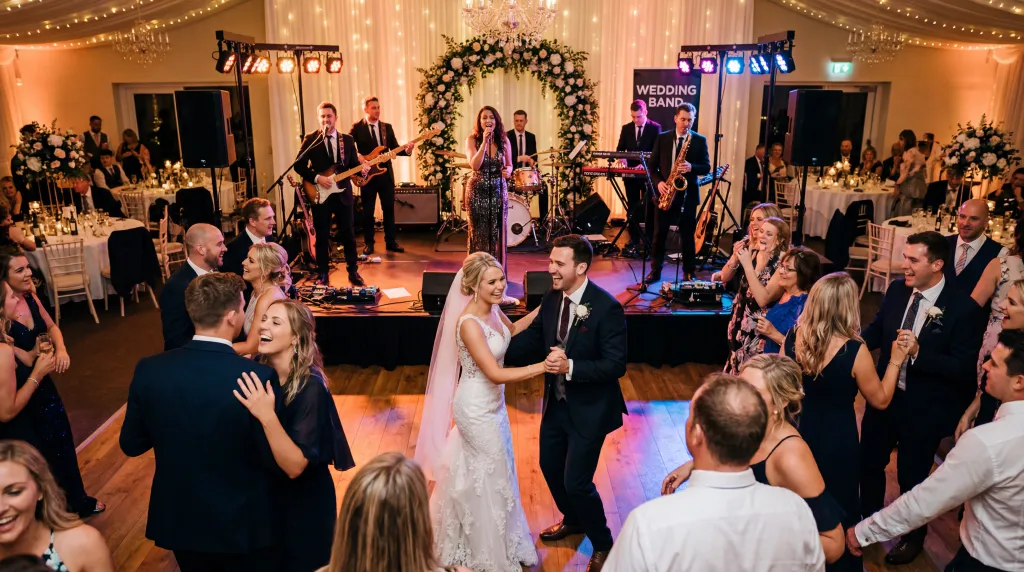
The dance portion of the night needs pacing. A packed dance floor is built, not wished into existence. The strongest bands understand when to play a universally loved anthem, when to pivot to a current hit, and when to bring back a timeless song that gets every generation singing.
Start with an invitation, not necessarily the biggest song of the night. After dinner, a familiar, upbeat selection or a short sequence of crowd-pleasers can bring people out naturally. Once the floor has a critical mass, the band can raise the intensity with bigger hooks, sing-along choruses, and dance classics.
Avoid trying to script every song in exact order. That approach can prevent a live band from responding to the room. Instead, provide a very concise list of must-plays, a few songs or artists you love, and a clear do-not-play list of maybe 3 or 4 songs. Then let experienced musicians use their judgment. If guests are responding to ’90s pop, disco, country crossover, or modern R&B, a great band should have the flexibility to stay in that lane long enough to make the moment count.
A do-not-play list is particularly useful when there are songs with difficult memories, lyrics that do not suit your crowd, or styles you simply do not enjoy. Keep it focused and short. A list of a few firm boundaries is helpful; a list that removes every popular option can make crowd-reading unnecessarily difficult and can also cause a band to turn down your wedding.
Decide What Must Be Live and What Can Be Recorded
Not every reception moment requires live music. A carefully chosen recorded track may be the right call for a highly specific ceremony processional, cultural dance, or first-dance recording that cannot be recreated authentically. The key is deciding this in advance and confirming who supplies the track, playback device, backup file, and audio connection.
For the moments that define the party, live music delivers a different level of impact. A powerful lead vocalist, a horn section, choreographed performers, and musicians who know how to command a room turn familiar songs into an experience guests remember. Premium production can elevate it further with dance-floor lighting, wireless microphones for toasts, and video elements that fit the scale of the venue.
There is a trade-off. Larger bands and advanced production require more space, a higher investment, and detailed logistics. For many couples, that investment is exactly what separates a pleasant reception from an incredible event. For an intimate wedding, a smaller ensemble with exceptional vocalists may create a better fit than a full production show. The right answer depends on the room, the guest count, and your priorities.
Coordinate Music With the People Running the Night
Your band, planner, venue coordinator, photographer, and caterer all influence the reception timeline. Share a single, updated schedule that includes introductions, dances, toasts, dinner service, cake cutting, cultural traditions, outfit changes, and the final send-off.
Toasts deserve special attention. If several people are speaking, decide whether they happen before dinner, between courses, or after the meal. Long gaps during the dance set can drain momentum, while a well-timed toast can create a meaningful reset before the party rises again. Your bandleader or entertainment coordinator should know every cue and have one point person authorized to make decisions on the wedding day.
Ask the venue about sound restrictions, load-in times, stage dimensions, curfews, and power. A world-class band can adapt, but surprises cost time and can limit production options. Wedding Music Bands helps couples coordinate these details so the performance feels effortless to guests, even when the planning behind it is highly precise.
Who Should Be Involved in Reception Music Planning?
| Person | Primary Responsibility |
|---|---|
| Wedding Couple | Choose music preferences, must-play songs, and special dances. |
| Wedding Planner | Coordinate the overall reception timeline and vendor communication. |
| Live Band or Entertainment Company | Perform music, manage pacing, and adapt to guest energy. |
| Venue Coordinator | Provide venue logistics, power access, sound restrictions, and setup information. |
| Photographer & Videographer | Coordinate timing for entrances, dances, and special moments. |
Choose a Last Song Worth Staying For
The final song is your last chance to put everyone in the same memory. Choose something communal, joyful, and easy to sing. It does not have to be the fastest song of the night. Sometimes a huge hit with arms around shoulders lands better than one final sprint of high-tempo music.
Tell your band whether you want a true finale, an encore-style moment, or music that carries guests toward an after-party. If transportation pickups, venue curfews, or a private last dance are part of the plan, build those details into the schedule so the ending feels intentional rather than rushed.
Give your musicians the vision, a few non-negotiable songs, and the freedom to perform. When the final note hits and your favorite people are still singing, dancing, and asking for one more song, you will know the reception music did exactly what it was meant to do.
Frequently Asked Questions About Reception Music Planning
How many songs should we choose for our wedding reception?
Most couples only need to personally select music for key moments such as the grand entrance, first dance, parent dances, cake cutting, and final song. Your live band can usually handle the remaining music by reading the crowd while following your overall preferences.
Should we give our wedding band a complete playlist?
It’s always better to provide a very short list of must-play songs, favorite artists, and a do-not-play list instead of trying to micromanage the song list. You need to allow experienced musicians to adjust the performance based on guest participation and energy throughout the evening. Nothing empties the dance floor faster than a micromanaged song list.
What music works best during cocktail hour?
Cocktail hour is typically best served by elegant background music such as jazz, acoustic guitar, piano, string ensembles, or instrumental versions of popular songs. The goal is to create atmosphere while allowing guests to comfortably socialize.
How long should the dance portion of the reception last?
Most wedding receptions include approximately two to three hours of dancing. The exact length depends on your overall timeline, venue curfew, and whether you’re planning an after-party.
Is live music worth it for a wedding reception?
Live music creates an interactive experience that recorded playlists cannot fully replicate. Professional wedding bands from Wedding Music Bands can adjust song selections in real time, engage guests, and build excitement throughout the evening, making the reception feel more personalized and memorable.
