
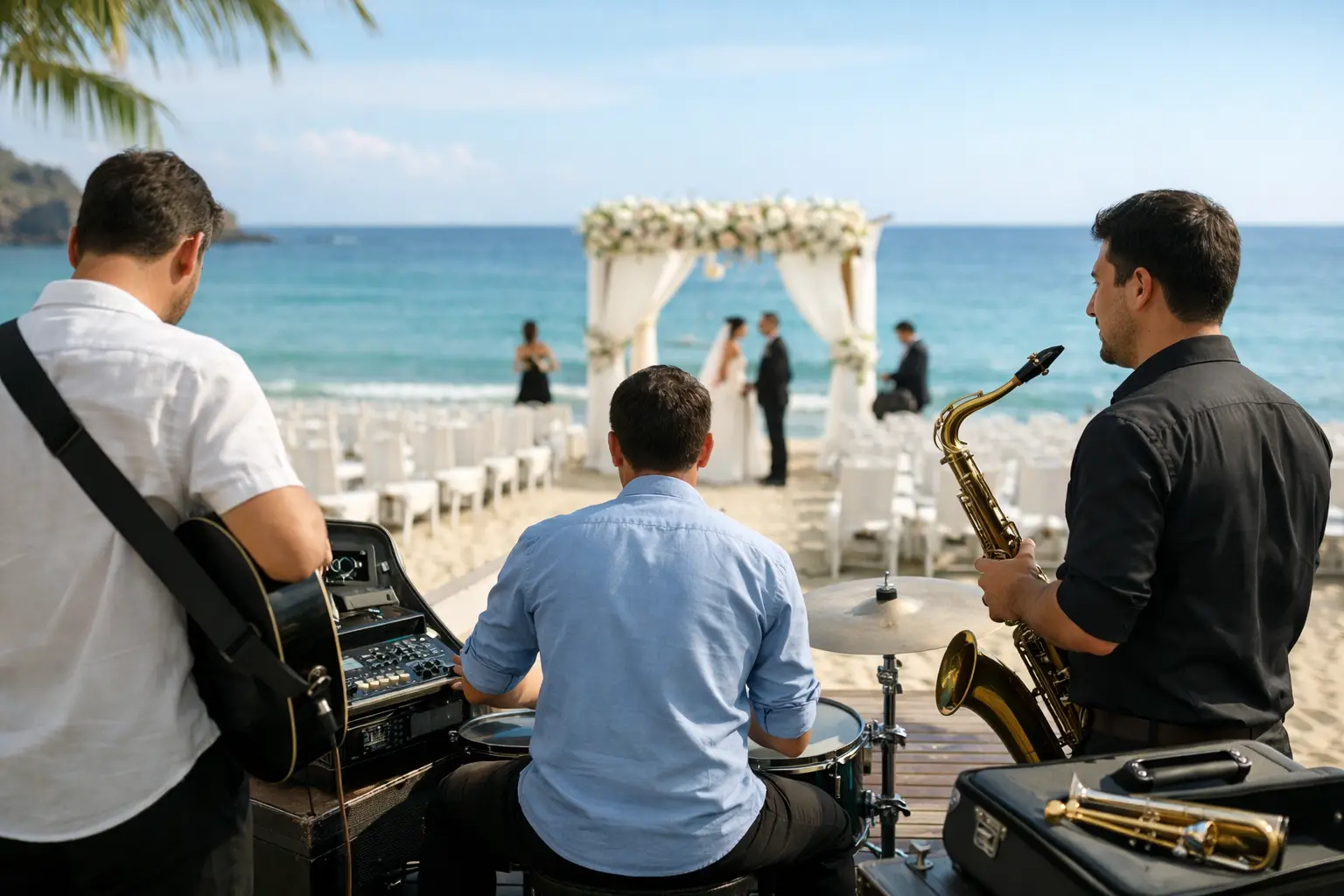
Destination Wedding Band Logistics Couples Should Know
A stunning destination wedding can feel effortless to your guests while hiding an enormous amount of moving parts behind the scenes. That is especially true with destination wedding band logistics, where travel, production, venue rules, and performance timing all have to line up perfectly for the night to feel magical. When the music is exceptional and the execution is tight, the result is exactly what every couple and planner wants – a packed dance floor, a polished experience, and a celebration that feels world-class. And no bands are more exceptional than Liquid Blue and Red Hot Revolution.
Why Destination Wedding Band Logistics Matter More than Most Couples Expect

Booking an elite live band for a hometown wedding already involves scheduling, staging, and coordination. Add a resort, another state, or an international venue, and the complexity rises fast. Flights can shift. Weather can affect load-in. Venues may have strict sound ordinances, power limitations, union labor rules, or narrow setup windows. Even luxury properties that host weddings every weekend often have unique production requirements.
This is why destination entertainment should never be treated like a simple vendor drop-off. A premium band is part performance, part production team, and part event partner. The strongest results happen when logistics are planned early, not patched together during wedding week.
For couples investing in a high-energy reception, this matters because live music is one of the biggest drivers of guest experience. If the band arrives late, lacks the right gear, or is forced into a compromised setup, the celebration feels smaller. If the planning is done correctly, the opposite happens. The band looks and sounds spectacular, the transitions stay smooth, and the party builds exactly the way it should.
Start with the Right Band for Destination Events
Not every great local band is built for travel. That distinction matters. A destination wedding requires musicians and management who understand far more than set lists and crowd interaction. They need to know how to travel with instruments, manage rider details, adapt to changing venue conditions, and perform at a high level under pressure.
The right band for a destination event usually has proven experience with fly dates, luxury properties, and complex event schedules – bands like Modern Retrospect and Rhinestone Rodeo. They know what can be shipped, what should be rented locally, and what needs redundancy. They also know how to communicate with planners, venues, and production partners in a way that keeps the process polished from start to finish.
This is where a premium agency model becomes valuable. Instead of leaving a couple to sort out technical details alone, an experienced booking partner like Wedding Music Bands helps match the event with a band that can actually deliver at destination level. That reduces risk and protects the experience you are paying for.
The Core Pieces of Destination Wedding Band Logistics
The biggest mistake couples make is assuming logistics only means airfare and hotel rooms. In reality, destination wedding band logistics usually includes travel, accommodations, local transportation, backline, sound and lighting, venue approvals, load-in timing, meal planning, performance scheduling, and contingency preparation.
- Confirm the band has proven experience with destination weddings, fly dates, and complex event schedules.
- Determine whether the band will travel with gear, rent local backline, or use a combination of both.
- Coordinate flights, hotel rooms, ground transportation, meals, and arrival buffers early.
- Review venue requirements for power, staging, load-in access, sound limits, curfews, and weather backup plans.
- Clarify who is responsible for production, sound, lighting, microphones, and technical crew.
- Create a detailed timeline for setup, sound check, ceremony music, cocktail hour, reception, and breakdown.
- Build contingency plans for delayed flights, rental issues, weather changes, and venue restrictions.
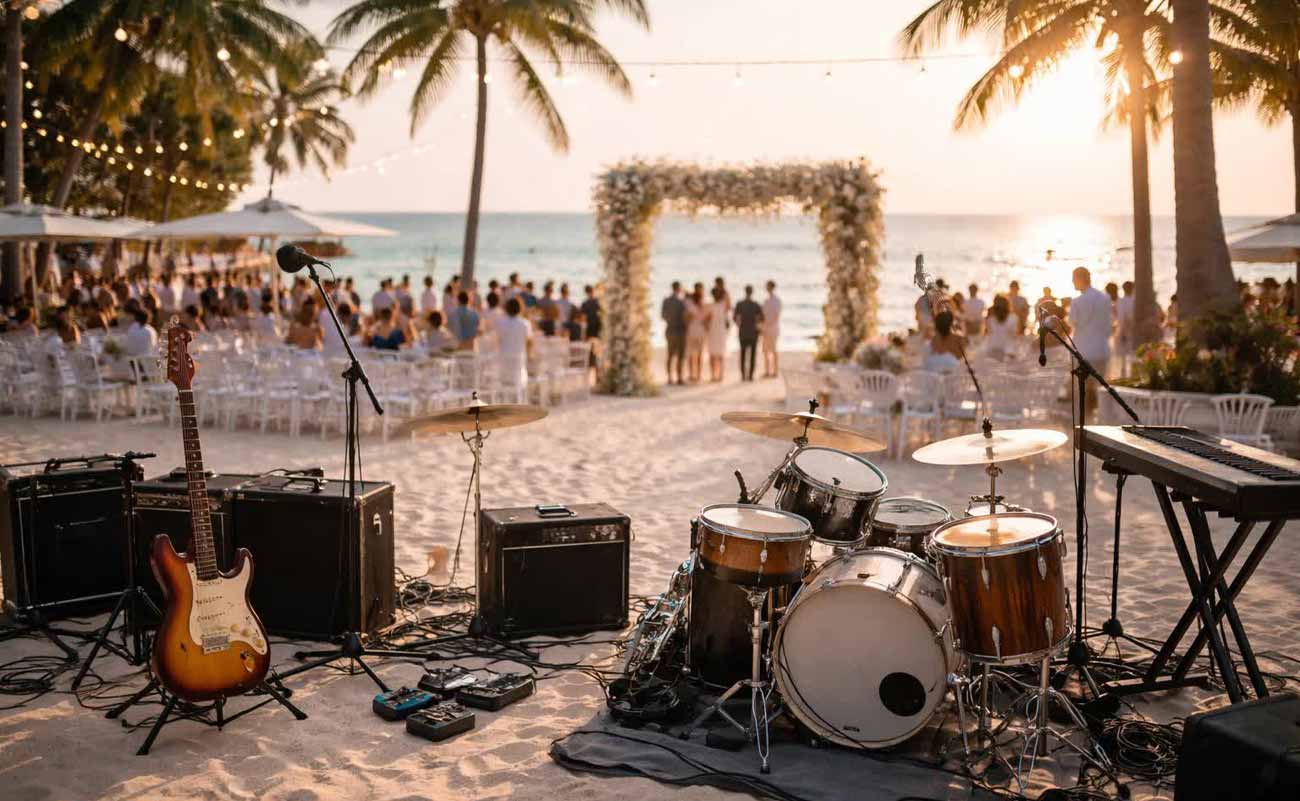
Travel is the obvious starting point, but it is only one piece. A band may need multiple flight options depending on instrument size and event timing. Hotel bookings need to align with rehearsal windows, welcome events, and late-night performance schedules. Ground transportation must account for musicians, luggage, and gear, not just passengers.
Then there is production. Some bands travel with essential show elements and rent heavier equipment locally. Others may require full local sound, staging, and lighting support. Neither approach is automatically better. It depends on the destination, venue access, budget, and how customized the reception experience will be.
There is also the timeline itself. Destination weddings often include more than one event – welcome party, ceremony, cocktail hour, reception, after-party, farewell brunch. If the same entertainment team is supporting multiple moments, logistics need to account for resets, travel between spaces, sound checks, and staffing changes.
Venue Coordination Can Make or Break the Performance
A beautiful venue is not always an easy performance venue. Beachfront settings may look incredible but create power, wind, humidity, and noise challenges. Historic properties may have limited access, strict load-in rules, or tight sound restrictions. Private villas can be visually spectacular but lack the infrastructure a premium live band needs.
That is why venue coordination should happen well before the wedding week. The band or booking team should know where the performance will take place, what the footprint looks like, how many guests are expected, what the power situation is, and when setup is allowed. Ceiling height, stage dimensions, weather backup plans, and curfews all matter.
Venue Details to Confirm Before Booking a Destination Wedding Band
| Venue Detail | What to Ask | Why It Matters |
|---|---|---|
| Power Access | Does the performance area have enough dedicated power for sound, lighting, and instruments? | Insufficient power can limit production quality or create event-day technical problems. |
| Stage or Performance Space | How much space is available for the band, vocalists, instruments, and production gear? | A cramped setup can reduce the visual impact and energy of the performance. |
| Load-In Access | Where can musicians and production teams unload gear, and when is access allowed? | Clear load-in details help prevent delays and rushed setup before the wedding. |
| Sound Restrictions | Are there decibel limits, outdoor music rules, or required end times? | Sound restrictions can affect band size, speaker placement, and reception flow. |
| Weather Backup | Is there a covered or indoor backup location with proper power and space? | A real backup plan keeps the music experience strong even if weather changes. |
For high-end events, production expectations are also higher. If you want a reception that feels electric, not just adequate, the venue needs to support that vision. Sometimes that means supplementing the venue’s in-house equipment. Sometimes it means adjusting the placement of the band so the room feels better and the dance floor fills faster. Small technical decisions can have a huge effect on energy.
Travel, Accommodations, and the Hidden Details Couples Miss
Band travel should be planned with the same seriousness as guest travel, and in some cases more. Musicians are not just arriving to attend. They are arriving to perform at a peak level, often after transporting valuable instruments and preparing for a tightly scheduled event.
Flights should ideally allow buffer time before the event date. If a wedding depends on same-day arrivals, the risk rises dramatically. For domestic destinations, arriving at least one day early is often the smarter move. For international events or remote resort locations, extra buffer becomes even more important.
Accommodations matter too. A premium band needs rooms that are practical, secure, and reasonably close to the venue. If a resort requires internal shuttle systems or security access, those details should be arranged in advance. The same goes for meals. A hungry band with no clear meal plan is not a luxury experience. Professional planning includes vendor meals timed appropriately around the performance schedule.
Ground transportation is another frequent trouble spot. A sedan transfer may work for a soloist, but not for a full dance band with garment bags, instruments, and production cases. Vehicle type, airport timing, and on-site movement should all be mapped out early.
Destination Wedding Band Travel Planning Guide
| Travel Item | Planning Consideration | Best Practice |
|---|---|---|
| Flights | Musicians may need extra time for instruments, luggage, and unexpected delays. | Schedule arrival at least one day before the event whenever possible. |
| Hotels | Rooms should be close enough to the venue to support rehearsals, sound checks, and late-night schedules. | Book practical, secure accommodations with easy access to the event location. |
| Ground Transportation | A full band may travel with garment bags, instruments, and production cases. | Use vehicles large enough for both performers and gear. |
| Meals | Vendor meals need to be timed around setup, sound check, and performance blocks. | Confirm meal timing in advance so the band is ready before performance time. |
| Gear and Backline | Some equipment may travel with the band, while larger items may be rented locally. | Confirm what is traveling, what is rented, and who is responsible for each item. |
Production Choices Shape the Guest Experience
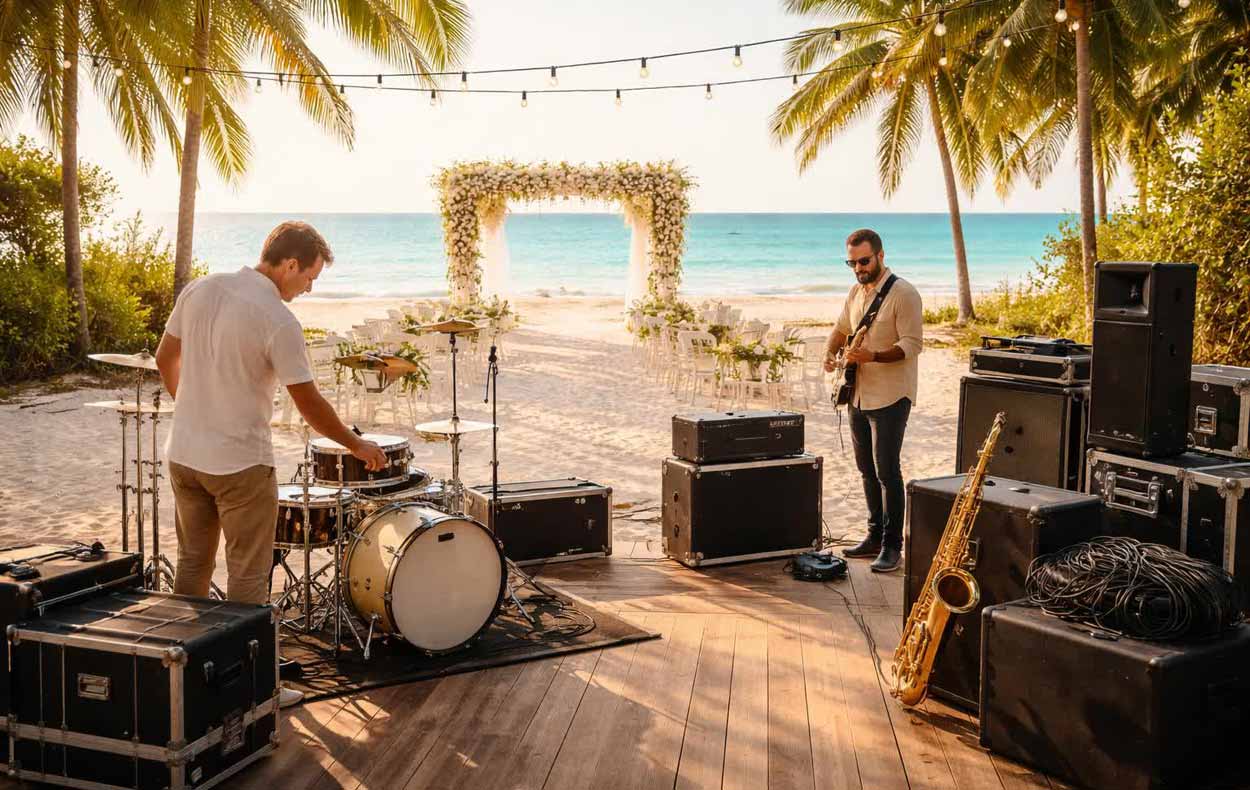
A destination wedding band is only as impressive as the environment supporting it. Even the most talented performers can be limited by weak sound, poor lighting, or a cramped setup. Couples planning luxury celebrations should think about the band as both musical entertainment and a visual focal point of the reception.
That does not mean every destination wedding needs a concert-scale build. It means production should match the ambition of the event. A refined jazz ensemble at cocktail hour needs elegant, clean sound. A high-energy reception band needs enough audio power, proper stage lighting, and space to deliver a full-impact show.
This is also where customization becomes exciting. Some events call for live ceremony music, then a stylish cocktail hour ensemble, then a full dance band with upgraded lighting for the reception. Others want specialty songs, cultural music elements, or a choreographed finale. Those moments are unforgettable when they are planned as part of the production strategy, not added as last-minute requests.
Timing, Contingencies, and Who Owns the Details
The best destination weddings feel smooth because someone owns the details. That could be a planner, a venue team, a band manager, or ideally a coordinated combination of all three. What matters is clarity. Everyone should know who is confirming travel, who is approving production, who is handling venue communication, and who is the point person on event day.
Contingency planning is just as important. Weather backups should be real backups, not vague ideas. If a ceremony moves indoors, can the musicians pivot quickly? If the outdoor reception faces wind or rain risk, is there a covered performance option with adequate power? If local rentals are delayed, is there a fallback plan?
Elite event bands and experienced agencies build around these possibilities because destination events rarely reward improvisation. The glamour comes from preparation. That is what allows the performance to feel effortless when the room is full and the dance floor is electric.
If you are planning a destination wedding celebration and want the entertainment to feel extraordinary, do not treat logistics like an afterthought. Treat them like the foundation of the show. With the right band, the right planning team, and the right production strategy, your wedding music will not just travel well – it will own the room.
Frequently Asked Questions About Destination Wedding Band Logistics
Why are destination wedding band logistics more complicated than local wedding band logistics?
Destination wedding band logistics usually involve travel, hotel rooms, local transportation, production needs, venue restrictions, weather plans, and timing across multiple wedding events. A local wedding may only require a band to arrive and perform, while a destination event requires much more coordination before the first song is played.
Should a destination wedding band arrive before the wedding day?
In most cases, yes. Having the band arrive at least one day before the event reduces the risk of flight delays, transportation issues, or rushed setup. For international weddings or remote resorts, even more buffer time may be helpful.
Who handles sound and lighting for a destination wedding band?
That depends on the band, booking agency, planner, venue, and destination. Some bands travel with key production elements, while most rely on local sound and lighting partners. The important thing is to confirm responsibilities clearly before the contract is finalized.
What venue details should be confirmed before hiring a destination wedding band?
Couples and planners should confirm stage size, power access, load-in rules, sound restrictions, curfews, weather backup options, and whether the venue requires approved vendors or union labor. These details can directly affect the band’s ability to deliver a polished performance.
Can one entertainment team handle multiple destination wedding events?
Yes, many professional destination wedding bands and entertainment teams can support multiple moments such as a welcome party, ceremony, cocktail hour, reception, and after-party. However, each event needs to be planned carefully so there is enough time for setup, sound checks, travel between spaces, and staffing changes.
